Zillow for Apple TV: Rethinking home discovery
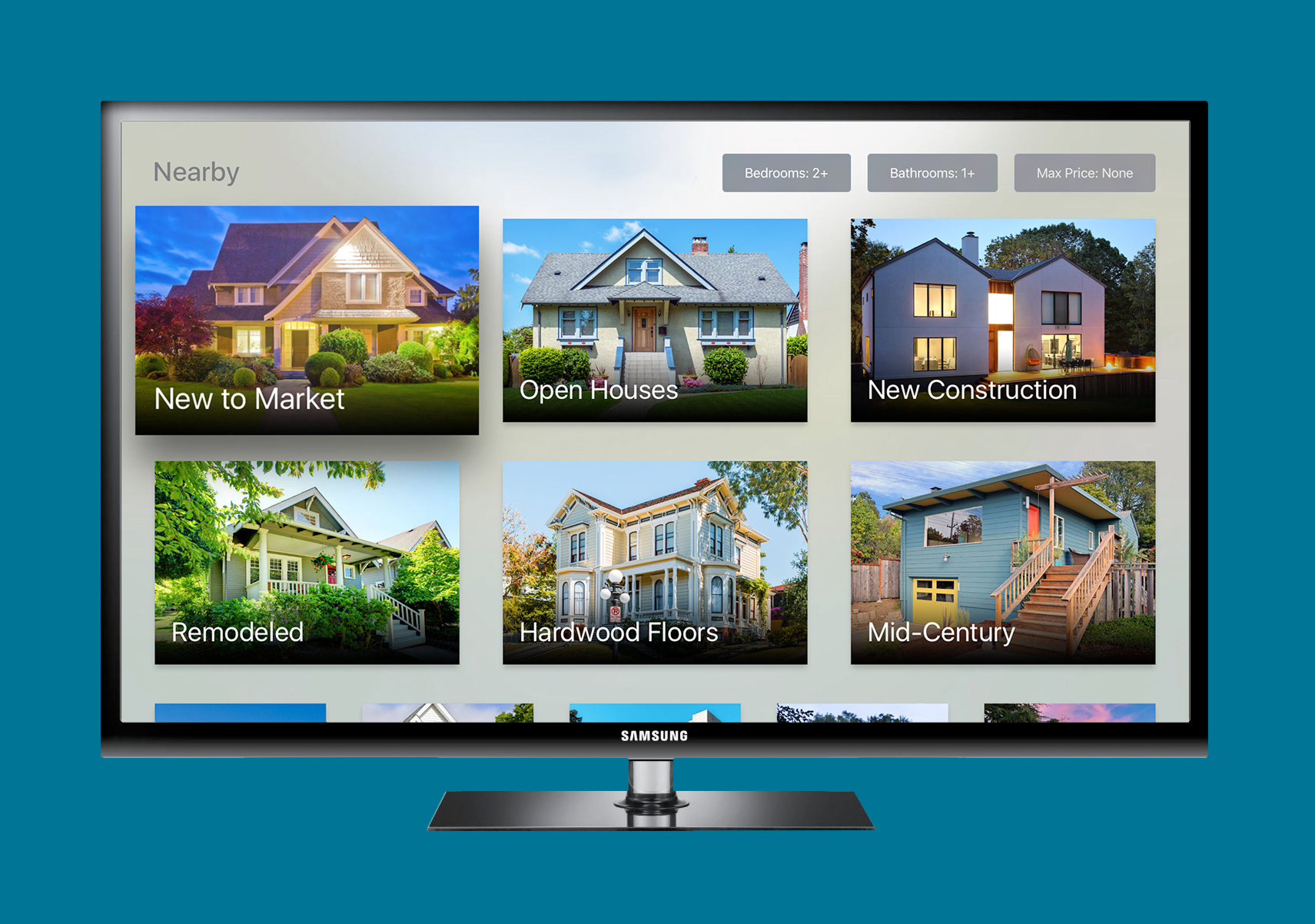
I led the design of Zillow’s first Apple TV experience, exploring how home shopping could work on a shared, large-screen device.
The opportunity was bigger than adapting Zillow’s existing experience to TV. We had to rethink how people discover and evaluate homes in a lean-back, communal environment, while designing for a brand-new platform with few established patterns and no native map support.
We designed around what the TV did best: immersive imagery, local discovery, and shared browsing. Nearby listings provided an immediate starting point, curated collections encouraged exploration, and saved homes connected the TV experience to research users had already done on mobile and web.
The result was a new way to experience Zillow that quickly became the platform’s most popular non-video app and was featured by Apple at its 2015 Apple TV launch event.
Project overview
Role
Lead Product Designer
Timeline
2015
Platform
tvOS
Teams
Product Management, Engineering
My role
Led product design for Zillow’s first Apple TV experience, from concept through launch.
Defined the interaction model and experience strategy for a new platform.
Partnered with product and engineering to establish patterns for large-screen, remote-based navigation.
Outcomes
Launched Zillow’s first Apple TV app alongside the platform’s 2015 debut.
Became the platform’s most popular non-video app.
Featured by Apple during the 2015 Apple TV launch event.
Established a new way for people to explore homes together on a shared screen.
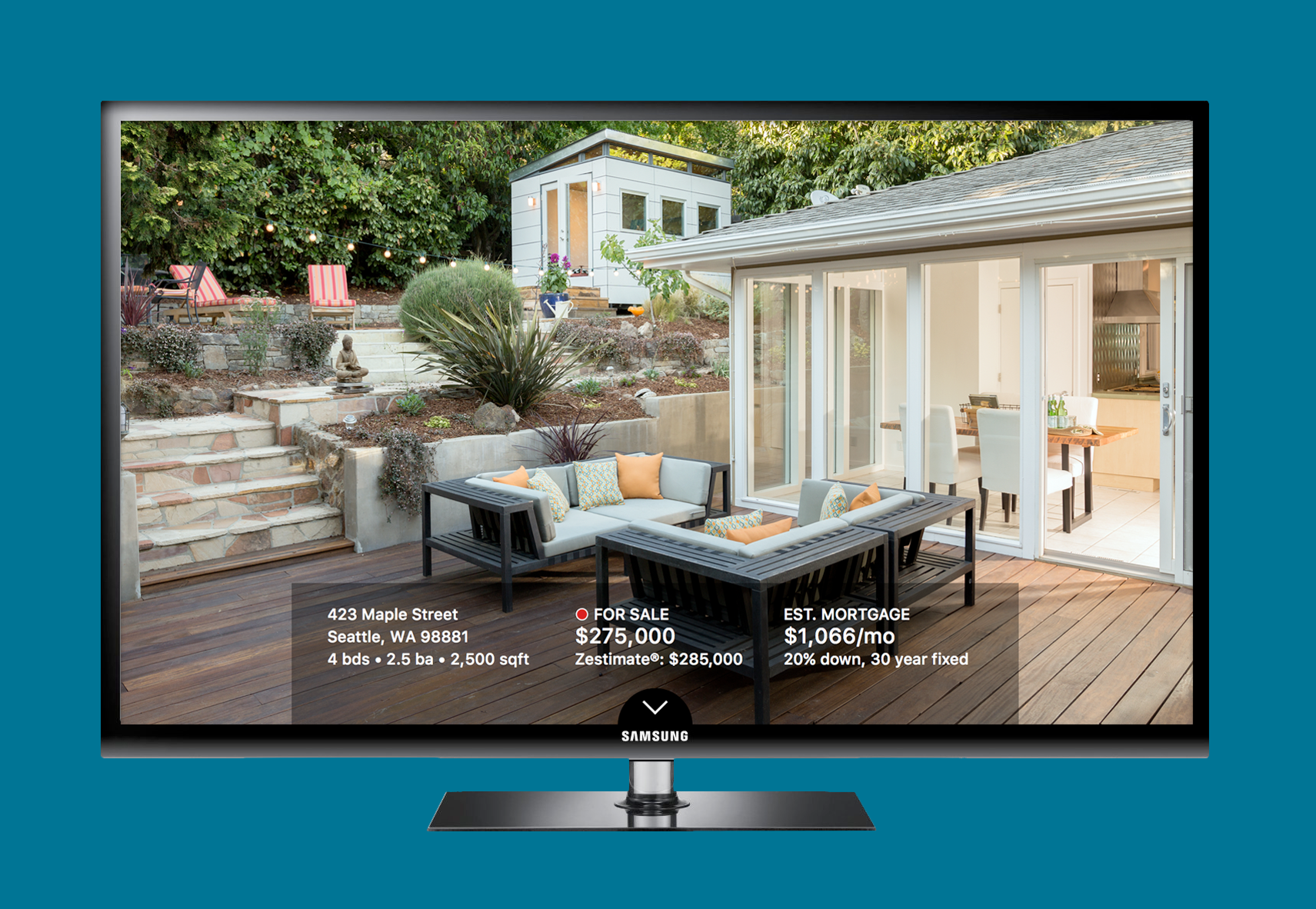
The opportunity: rethinking home shopping for TV
When Apple introduced tvOS, Zillow had an opportunity to explore an entirely new context for home discovery. There were no established real estate patterns to follow, and it wasn't clear whether an activity typically done privately on a phone or computer would translate to a shared, lean-back experience.
The platform also presented a fundamental constraint: Apple TV didn't yet have native map support, a core part of Zillow's experience.
The approach: design around what TV does best
Rather than recreate the existing Zillow experience, we focused on the strengths of the new medium: large-screen imagery, local discovery, and shared exploration.
Nearby Listings: Used location to surface homes around the viewer, giving them an immediate starting point without relying on maps.
Home Collections: Created curated collections around interesting property attributes, turning local inventory into an experience designed for browsing.
Saved Homes: Connected the TV experience to Zillow accounts, allowing users to bring their personal research from mobile and web into the living room.
Video: Partnered with Zillow’s original content team to bring home-related video programming to the platform.
Result & impact
The app was featured by Apple during its 2015 Apple TV launch and quickly became the platform's most popular non-video app.
More importantly, early behavior challenged our assumptions. We expected people to primarily browse homes together, but analytics showed users were actively saving and shopping for properties. That insight led us to quickly introduce practical search filters for bedrooms, bathrooms, and price.
The experience demonstrated that home shopping could extend beyond traditional desktop and mobile contexts, helping establish a new model for Zillow on the big screen.